Method
0 of 6 doneTap a step to tick it off as you go.
Why white chocolate and matcha work together
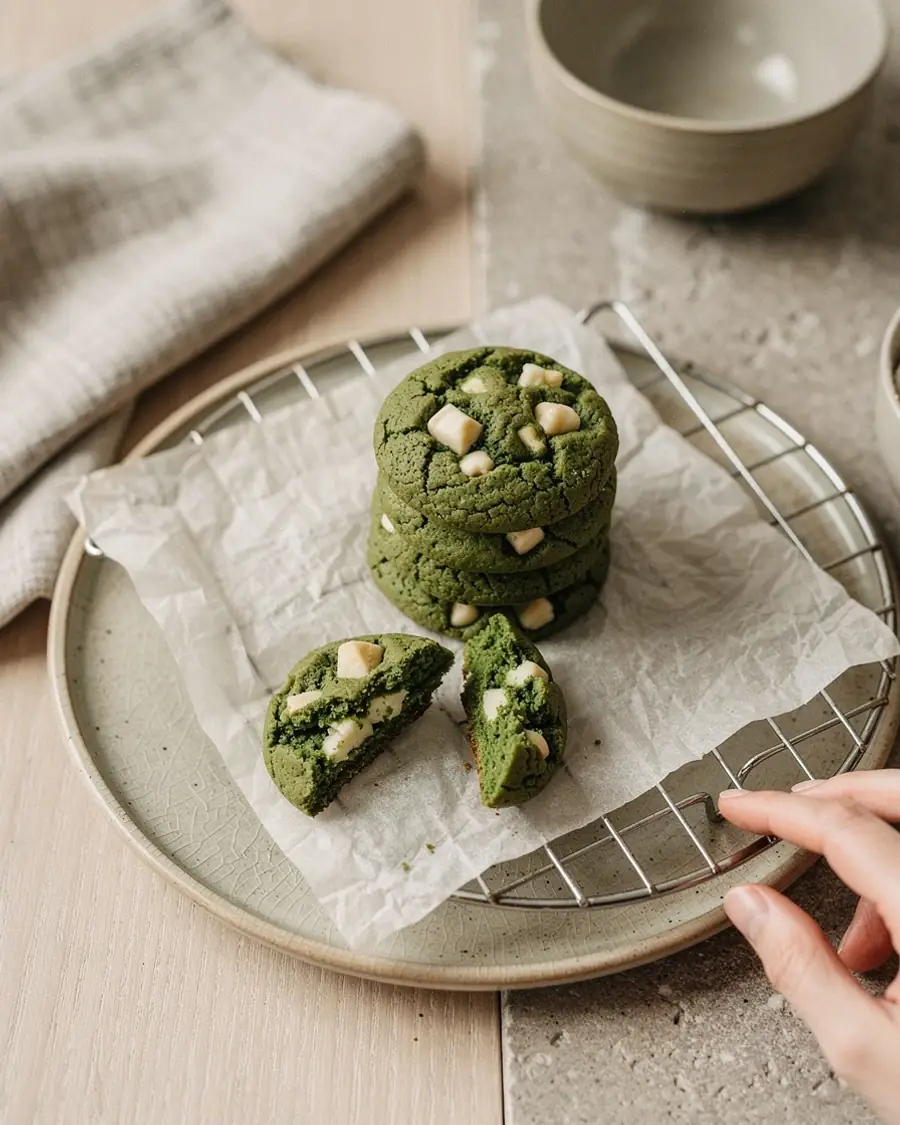
Matcha is grassy, gently bitter and savoury-edged; white chocolate is sweet, milky and rich. Each covers exactly what the other lacks, which is why the pairing shows up everywhere from KitKats to cafe slices. In these cookies the chocolate also does structural work: pockets of melted white chocolate keep the crumb soft. Chunks chopped from a block make better pockets than uniform drops, and any standard supermarket white chocolate works.
Do you really need to chill the dough
Yes, and 30 minutes is the practical minimum. Warm dough spreads before it sets, giving thin, greasy cookies; chilled dough holds its shape while the outside bakes, giving thick, chewy middles. The rest also lets the flour hydrate, which improves both texture and flavour. If you plan ahead, the dough is at its best after an overnight chill, and the rolled balls freeze for up to 3 months. Bake from frozen with 1 to 2 extra minutes.
Common questions
How much matcha do I need for cookies?
6 g (about 3 level teaspoons) per 200 g of flour gives a clear but balanced matcha flavour; 8 g if you want it stronger. Always sift it in with the flour.
Can I use ceremonial grade matcha in cookies?
It bakes fine but it is a waste: the oven flattens the delicate flavour you paid for. Culinary grade is designed for exactly this and gives a stronger matcha taste in the finished cookie.
Why did my matcha cookies spread flat?
Almost always unchilled dough or over-softened butter. Chill the dough at least 30 minutes, use butter that is pliable rather than shiny, and bake on a cool tray, not one straight from the oven.
Can I make the dough ahead?
Yes, refrigerate up to 48 hours, or freeze the rolled balls for up to 3 months and bake from frozen with a minute or two extra. The chilled-overnight version tastes best.